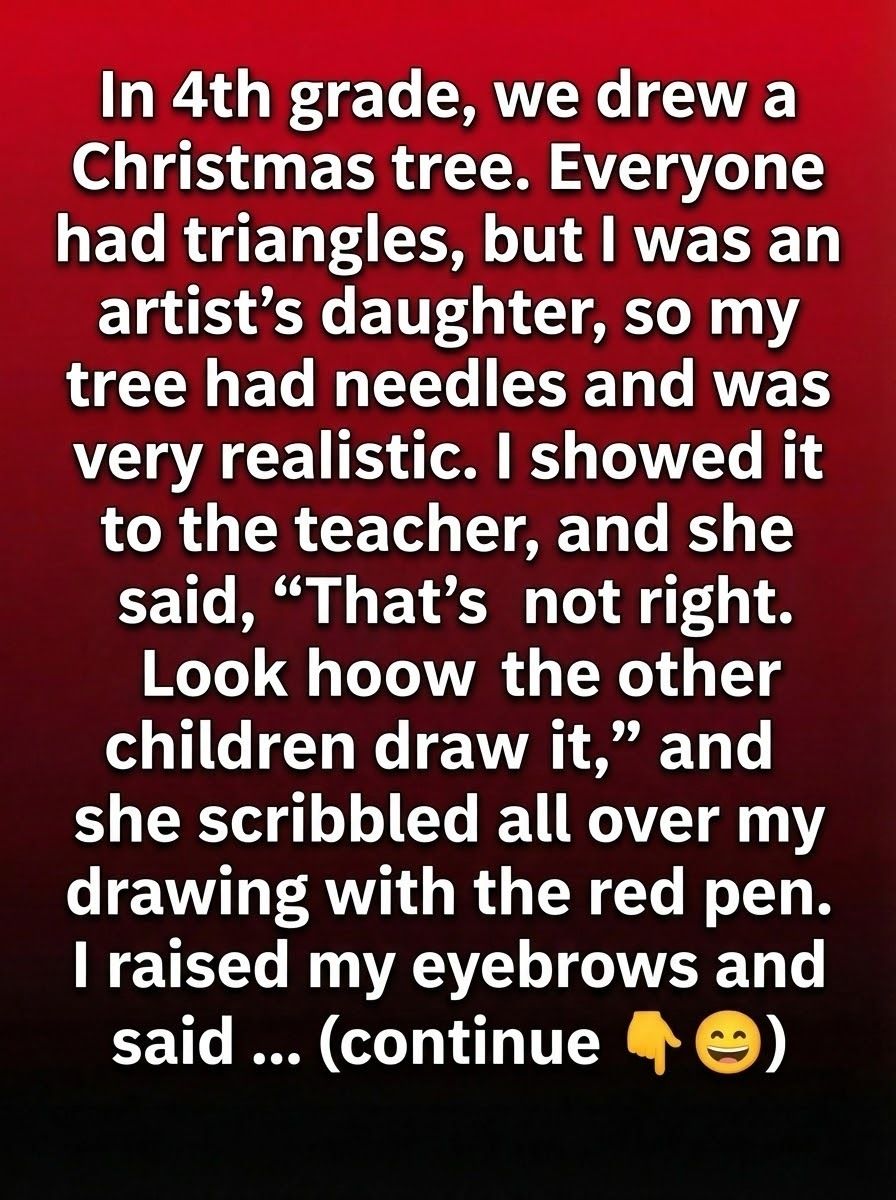
In fourth grade, art class was meant to be easy and cheerful. We were told to draw a Christmas tree, and most of my classmates copied the example on the board—clean triangles stacked neatly, topped with a star. I did something else.In a home where art supplies were everywhere, I’d learned to notice small details. I drew a tree with thin needle lines, uneven branches, and a slight lean, the way real trees grow. I was proud as I handed it in, expecting curiosity or at least a question. Instead, the teacher frowned. She held my paper beside another child’s and said mine was “wrong.” Then she uncapped her red pen and began correcting it—straightening branches, flattening texture, reshaping it into something safe and familiar. “Look how the other children drew it,” she said, as if creativity had rules.The classroom suddenly felt smaller, quieter, heavier. I wasn’t angry. I was confused.I looked around at the identical trees on the wall and wondered why mine wasn’t allowed to exist as it was. The red ink felt less like guidance and more like permission being taken away. I didn’t cry or argue.
 I just watched and took it in. Then I asked, calmly, “But don’t real trees look different from each other?” The room went silent. The teacher paused, surprised, then moved on without answering, leaving my paper behind.Years later, I still remember that drawing. Not because it was perfect, but because it showed how I saw the world—uneven, detailed, quietly unique. The red pen didn’t erase that view; it sharpened it.Sometimes being told you’re wrong is how you learn who you are. And sometimes, a simple question is enough to remind everyone there’s more than one right way to see.
A Childhood Drawing That Taught Me the Value of Seeing Things Differently