The smell of damp earth clung to my wool coat as I stepped through the front door of our home in Grand Rapids. February in Michigan was a relentless cycle of gray skies and bone-chilling mist that seemed to seep directly into your marrow. I had just spent the afternoon standing by a grave, watching the heavy soil thump onto the casket of the woman I had cared for every single day for a decade.
I expected the house to be silent and heavy with the scent of lilies, but instead, I walked into a room that felt sharp and clinical. My husband, Jude, was sprawled on the sofa with his legs crossed, while his sister, Maura, sat perched on the edge of the armchair like a bird of prey. Between them sat a man in a charcoal suit, clutching a leather briefcase that looked far too official for a Tuesday afternoon.
No one stood up to greet me, and no one offered a word of comfort about the service we had just attended. Jude looked at me with eyes that were as cold and distant as the frozen lake outside our window.
“We need to get this over with, Serena,” Jude said, his voice completely devoid of the warmth I had married fifteen years ago. “Mr. Higgins is here to finalize the estate transition.”
The lawyer adjusted his glasses and opened a thick folder, clearing his throat with a sound that echoed in the hollow room. He didn’t ask me to sit down, so I remained standing by the door, my keys still biting into my palm.
“Per the document provided to me, the residence and all liquid assets are bequeathed solely to Jude,” Mr. Higgins stated in a flat, monotone voice. “Serena, you are allocated a sum of four thousand dollars for your assistance with the deceased.”
The words felt like physical blows, arriving one by one until I could barely draw a breath. Ten years of lifting a woman twice my size, of changing bandages, and of sitting through sleepless nights of fever were now categorized as a line item labeled “assistance.”
“That is it?” I whispered, my voice sounding thin and unfamiliar even to my own ears.
Maura let out a sharp, mocking laugh and adjusted her designer handbag on her lap. “Honestly, Serena, you should be grateful you’re getting anything at all considering you were basically just the live-in help.”
“You have forty-eight hours to vacate the premises,” Jude added, standing up to loom over me with a look of pure indifference. “The locks will be changed on Thursday morning, so I suggest you start packing your things now.”
I didn’t argue or scream, because a decade of caregiving had taught me to save my energy for things that actually mattered. I simply turned around, walked up the stairs to the guest room I had occupied for years, and packed a single suitcase with my bare essentials.
As I walked out into the freezing Michigan night, I felt the small, sealed envelope tucked into my inner pocket. It was a letter that my mother-in-law, Martha, had pressed into my hand three days before she took her final breath.
“Do not open this until the dirt is over me, Serena,” she had whispered, her voice a mere rattle in her chest. “They will show their true faces soon enough, and you will need what is inside.”
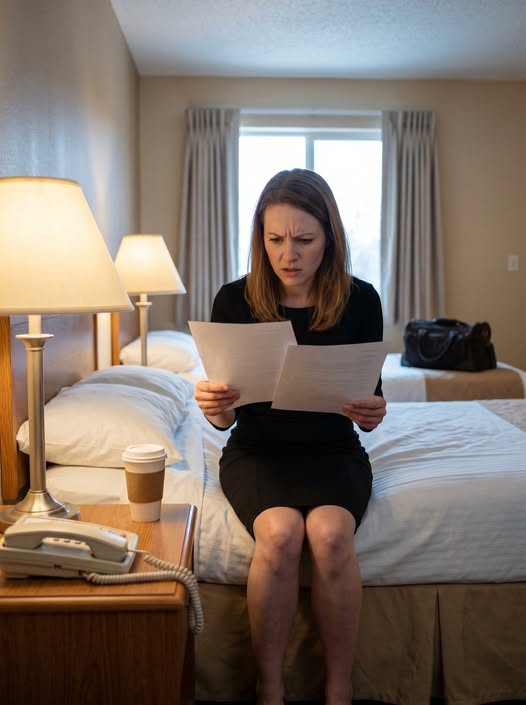
I drove to a flickering motel on the outskirts of the city, the neon sign buzzing like a trapped insect in the dark. The room smelled of industrial cleaner and old cigarettes, but it was the first place in years where no one expected me to be anything other than myself.
With shaking fingers, I finally tore open the heavy cream paper and felt a small, brass key fall onto the thin polyester bedspread. There was a note written in Martha’s distinctive, elegant cursive that had grown shaky only in her very final months.