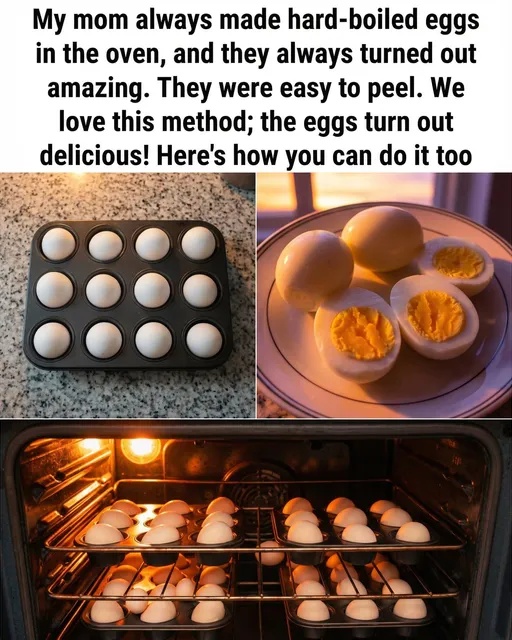
Perfecting a hard-boiled egg sounds simple, yet many people know how tricky it can be. From shells that refuse to peel to yolks that turn an unexpected shade of green, stovetop boiling doesn’t always deliver predictable results. That challenge is what inspired a closer look at an alternative technique: baking eggs in the oven. Although the idea might seem unconventional at first glance, it has gained popularity for producing reliable results with far less supervision. Testing this method side-by-side with traditional boiling revealed that oven-baked eggs can be surprisingly effective, especially for anyone who values convenience and consistency in the kitchen.
One of the strongest advantages of using the oven is how effortless the process becomes. There is no pot to watch, no chance of water boiling over, and no need to adjust the heat mid-way. Instead, the eggs simply sit in a preheated oven, allowing the cook to focus on other tasks. This makes the technique especially appealing for meal prepping, hosting brunches, or preparing large quantities for salads and snacks. While stovetop boiling works well for small batches, the oven excels when more eggs are needed at once, offering a hands-off method that many home cooks appreciate.
The steps themselves are straightforward. Begin by preheating the oven to 325–350°F and placing the eggs in a muffin tin or similar heat-safe dish to keep them from rolling. Bake them for 25–30 minutes, depending on your oven. While they cook, prepare a bowl of ice water. As soon as the timer goes off, transfer the eggs directly into the ice bath to stop the cooking process and help loosen the shells. This method requires only a few basic items—eggs, a muffin pan, and ice water—yet it yields results that can be peeled immediately or stored for later. Unpeeled eggs keep for up to a week in the refrigerator, while peeled eggs are best enjoyed within a few days.
Though baking offers many advantages, it also comes with a few considerations. Because heat distribution varies among ovens, some eggs may cook unevenly or develop small brown spots on the shells. Overbaking can create firmer whites or slightly dry yolks, and—just like with boiling—overcooking may produce a harmless green-gray ring around the yolk. The flavor remains mild and familiar, but the texture can differ slightly from traditionally boiled eggs. Regardless of cooking method, one constant remains: peeling success is influenced more by the age of the eggs than by how they are cooked. Older eggs naturally separate from their shells more easily. In the end, both the oven and the stovetop methods are effective; the best choice depends on whether you prioritize speed or convenience. For large batches and multitasking, the oven shines. For quick results or smaller quantities, boiling remains the classic, dependable option.