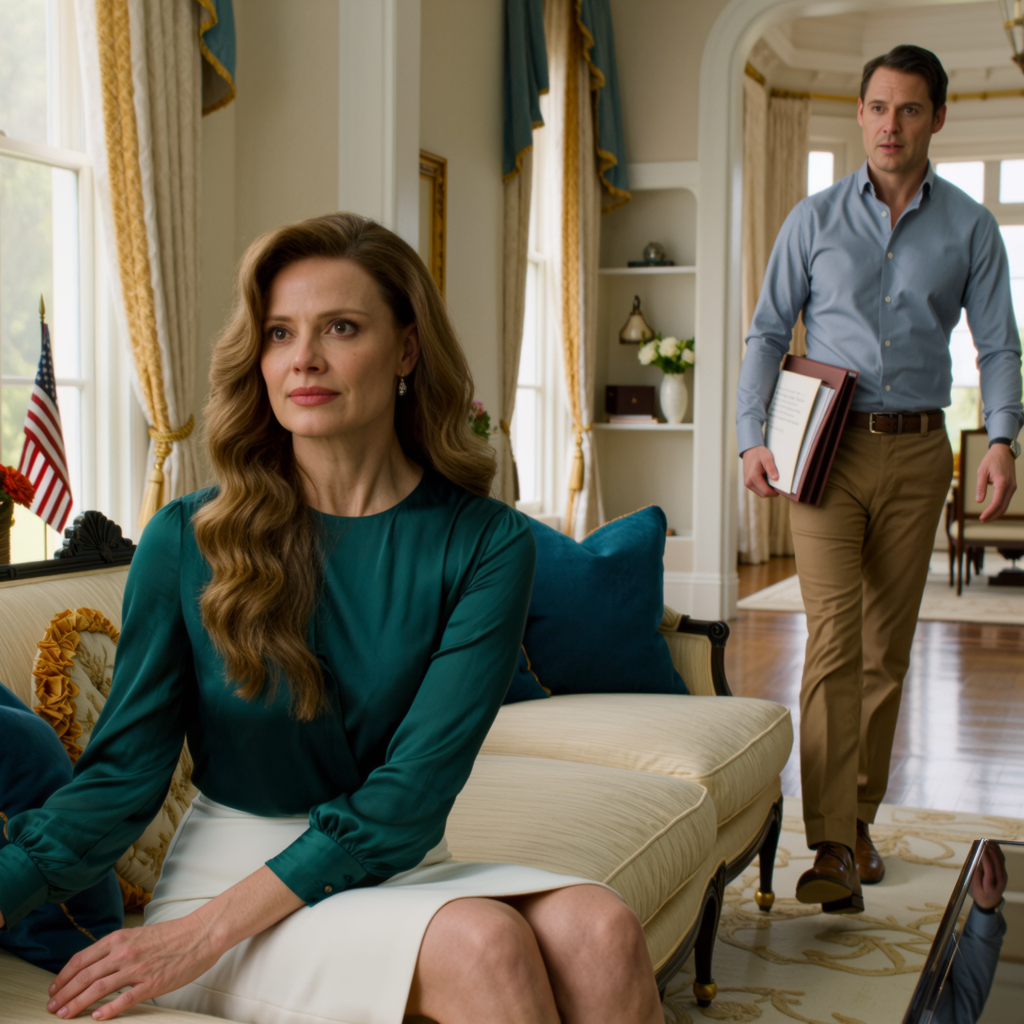
My apartment was my sanctuary, built with years of sacrifice, and I truly believed I was about to share it with the man I loved. Instead, his sudden demand to claim it as his own pulled a seam loose in the life I had been living, and once that seam split open, the whole thing started to unravel.
My fiancé wasn’t just planning a wedding.
He was planning a takeover.
The dress was perfect.
I know every bride says that, but this one didn’t feel like a dress so much as a version of myself I hadn’t been able to wear before. It was a simple sheath of ivory silk, understated and expensive-looking without trying too hard, the kind of dress that seemed to glow rather than sparkle. When the saleswoman zipped me into it in that boutique on Madison Avenue, the fabric settled against my skin like it had already memorized me.
I stood on the pedestal and looked at my reflection in the long mirror framed by soft lights. My hair was clipped back. My face was bare except for mascara and lip balm. There was a paper cup of iced coffee sweating on the little side table and the faint smell of steamed fabric in the room. Outside the fitting area, I could hear the soft murmur of other women talking about trains and veils and alterations and mothers-in-law.
But in that moment, it all went quiet.
I didn’t just see a bride.
I saw the woman I had worked very hard to become.
Confident. Stable. Loved. The kind of woman with a home of her own and a career she’d built herself and a future that seemed, for once, to be moving toward her instead of away from her.
My fiancé, Mark, was going to lose his mind when he saw me in it. That thought sent the warmest little rush through my chest. It had been doing that for months, that thought of him, that easy contentment I used to feel whenever I pictured his face. Mark had become, for lack of a better word, my fairy tale. Not the silly kind from childhood. The grown-up kind. The kind where two tired adults find each other at exactly the right moment and decide to make a life that feels kinder than the ones they had before.
We met in a coffee shop in Midtown on a wet Tuesday morning when I was carrying too many things and moving too fast. I had a portfolio case under one arm, a laptop bag hanging off my shoulder, and a coffee I had no business trying to open while stepping aside for a man coming in through the door. We collided. Lattes went everywhere.
He apologized before I even had time to be annoyed. He was handsome in that easy American way that doesn’t look too polished until you notice how carefully effortless it is. Dark hair, kind eyes, the faintest crease at the corner of his mouth like he smiled often. He insisted on replacing my drink, then insisted on paying for the dry cleaning on my coat, then somehow made me laugh while I was still wiping foam off my sleeve.
I gave him my number because it felt natural.
Our first date was three nights later at a little Italian place in the West Village where the tables were too close together and the waiter called everyone sweetheart. He listened when I talked. Really listened. Not in that performative way people do when they’re waiting for their turn to say something charming, but like he wanted to understand the shape of my life. He remembered details. He asked thoughtful follow-up questions. He told me about his own childhood, his job, the friends he’d had forever, the way he wanted a real home one day instead of bouncing from rental to rental.
That line got me, though I didn’t know it at the time.
A real home.
I understood that hunger down to the bone.
I didn’t come from money. My parents were decent people, but we were always one expense away from panic. I grew up hearing things like not this month, maybe after tax season, don’t turn the thermostat up, and please make your sneakers last until winter. We were not tragic. We were not desperate. But nothing ever felt secure. Money was always a door that might not stay shut.
So I became the kind of person who built her life in small, controlled steps.
I worked through college. Three part-time jobs at one point. I answered phones in the admissions office, waited tables on weekends, and did design gigs for campus groups that paid badly and wanted miracles. I ate a truly irresponsible amount of instant noodles. I wore the same black coat for six winters. I said no to spring trips and birthdays out and concerts and all the ordinary, harmless ways people in their twenties spend money because I had fixed one private goal in my head and I did not let it go.
I wanted my own place.
Not because I was particularly domestic. Not because I dreamed of gallery walls and throw pillows and Sunday mornings making pancakes. I wanted my own place because I wanted one square of the earth where nothing could suddenly disappear.
After graduation I kept grinding. I got full-time work in-house for a branding agency in Manhattan, then moved into freelance and contract design when I realized I could make more money if I was willing to live with uncertainty. I lived with three roommates in a fifth-floor walk-up in Queens where the pipes banged like someone was kicking them at night and the kitchen window never quite closed all the way. I saved every bonus, every tax return, every random extra check. I kept my old phone until the battery swelled. I learned how to make dinner out of a can of beans, half an onion, and the end of a rice bag.
Five years later, I signed closing papers on a one-bedroom condo in Astoria.
The first time I unlocked the door and walked into that empty living room, I sat down on the bare hardwood floor and cried so hard I gave myself a headache. Light came in through the west-facing windows in long bars across the wall. There was nothing there yet except echoes and the smell of fresh paint, but to me it already felt more beautiful than anything I had ever owned.
It wasn’t just an apartment.
It was a monument to my independence.
Every inch of it had a story. The couch I found after stalking resale sites for weeks. The dining table I bought secondhand and refinished myself in my parents’ driveway in New Jersey one humid August weekend. The pale green paint in the bedroom that took four samples before I found the one that felt calm instead of sad. The line of tiny succulents on the windowsill. The good knives I bought one at a time because I couldn’t afford the set. The framed art prints. The lamp beside the couch with the dimmer switch I loved because it made the whole room feel forgiving at night.
It was the first place in my life that was completely mine.
When Mark and I got serious, he moved in after about a year. His rental in Murray Hill was tiny and overpriced and had a radiator that sounded like a dying engine. My place was bigger, calmer, closer to the N train, and closer to both our jobs. It made practical sense.
At first, living together felt wonderful.
He brought a little noise into my carefully arranged life, but it was charming noise. His laugh. His shaving cream in my bathroom. His bad classic-rock records stacked beside my media console. His habit of humming under his breath when he was chopping onions. He was good company. He made ordinary evenings feel companionable. He’d meet me at the bodega on the corner if I texted him on my way home. He’d bring me tea when I was buried in deadlines. He learned which floorboard near the bedroom door squeaked and would step over it if I was still asleep.
He paid half the groceries and half the utilities. I kept paying the mortgage and HOA fees and property taxes and insurance because those were mine. The arrangement seemed obvious. Simple. Fair.
My sanctuary stopped feeling like just my sanctuary. It started feeling like our home.
And that, I think, was the first real trick.
Because by the time the reveal came, he already had his shoes by the door, his towels in the bathroom, his mail stacked in a neat little pile on the entry table, and his scent in the closet beside mine. He had made himself part of the atmosphere. He had become something I would have to rip out, not merely ask to leave.
The wedding planning ramped up fast once we got engaged.
We were not extravagant people, but we wanted it to feel special. The venue was a restored industrial loft in Long Island City with exposed brick and tall windows and enough room for a dance floor. We had chosen late spring because I wanted peonies and the chance of good light for photos. We argued over nothing and everything in the ordinary happy way couples do when they are making a life together—table linens, guest lists, whether we needed a signature cocktail, whether his Uncle Ron could be trusted with an open bar.
I loved those months. Or at least I thought I did.
I loved my spreadsheet tabs and fabric swatches and tastings and the little stack of save-the-dates on the counter. I loved how future-oriented everything felt. We were choosing a future together. That’s how I understood it.
Three months before the wedding, on a Thursday evening in early March, we were sitting on the couch after dinner. It had snowed that afternoon, the wet slushy kind that turns New York sidewalks into filthy gray soup. We had kicked our shoes off at the door. My laptop was open on my knees while I compared catering options, because even after two tastings I still couldn’t commit between salmon and roast chicken.
Mark had his arm around me, lazy and warm.
“You know,” he said, kissing the top of my head, “I’ve been thinking about something.”
“Oh yeah?” I said, still scrolling. “If this is about cousin Tim refusing to wear a tie, I’m done discussing that man.”
He laughed.
“No. Not Tim. Something more permanent. More us.”
That got my attention.
I closed the laptop and turned toward him.
“Okay,” I said. “You sound serious.”
He took both my hands. His face was soft, earnest, almost vulnerable.
“Clara, I love you more than anything. I love the life we’re building. I love this home.”
He looked around the room as he said it, and even then some small protective part of me noticed the wording. This home. Not our home. Not home. This home.
“I want it to be our home officially,” he said.
I smiled because I still didn’t understand.
“It is our home.”
“I know emotionally it is. But legally, it isn’t.”
Something in my stomach tightened.
He squeezed my hands a little more firmly.
“It’s your apartment. Your deed. Your mortgage. Everything is under your name. We’re about to be married, Clara. We’re about to become one legal unit. Everything of mine will be yours and everything of yours will be mine. That’s what marriage is.”
I felt the first cold hint of where this was going.
He paused, then said it with the careful calm of someone presenting a reasonable idea.
“I think, as a sign of commitment before the wedding, you should put my name on the deed.”
Just like that.
No stumble. No hesitation. No awareness that what he had just asked me to do was enormous.
The room seemed to go strangely silent. The radiator clicked. A siren passed somewhere far off on Ditmars Boulevard. The refrigerator hummed in the kitchen. I was aware of all of it because I could no longer trust the face in front of me, so my body started taking inventory of everything else.
He was asking for ownership.
Not symbolic ownership. Not emotional ownership.
Legal ownership.
“Mark,” I said slowly, “that’s not a small thing.”
“I know.”
“That’s not like adding you to Netflix. That’s my deed.”
“Our deed,” he corrected gently.
“No. Mine. At least right now.”
He gave a little sad smile, like I had missed the point.
“Exactly. Right now. But that should change.”
I pulled my hands out of his.
“After we’re married, we can talk about how to structure joint assets,” I said. “We can talk to a lawyer, talk about a prenup if we need to, make sure it’s fair and clear—”
“No prenup.”
He said it so sharply that I stopped.
The warmth in his expression flickered. Just for a second, but enough. It was like seeing a light switch off behind someone’s face.
“No prenup,” he repeated. “Prenups are for people planning to fail. This isn’t about that. This is about security. My security.”
I stared at him.
“Your security? You live here. You are secure.”
He leaned forward.
“You don’t get it. I need to know that if we get into a fight, if things ever get ugly, you can’t hold this apartment over my head. I need to know you can’t just throw me out because you’re mad. I want my name on that deed so you can’t ever kick me out.”
Then he delivered the line I would hear in my head for weeks afterward.
“Not for a day, not for a week, not for life.”
I can still remember the exact feeling that moved through me then.
Not fear at first. Not even anger.
Recognition.
A terrible, instinctive recognition that I was no longer having the conversation I thought I was having. That love had left the room and something else had taken its place. Something transactional. Something strategic.
“Are you listening to yourself?” I asked. “Are you actually telling me you think I would throw you out over a fight?”
“People change,” he said. “You don’t know who you’ll be in five years. Ten years. I’ve seen this happen. The woman owns the home, things go bad, and suddenly the guy’s out on the sidewalk with a duffel bag.”
“I am not some imaginary woman from your cautionary tale.”
“It’s not about you personally,” he said.
“That’s ridiculous. It is literally about me personally. You are asking me to sign over part of the single biggest asset I have ever worked for because of a hypothetical future where I become cruel.”
He sat back, and I watched his expression harden by degrees.
“This is the problem,” he said. “You don’t think like a partner. You still think like it’s you and your things. Your apartment. Your equity. Your rules.”
“Because I bought it before I knew you.”
“And?”
“And that matters.”
His jaw shifted.
“You know what this sounds like?” he asked. “It sounds like no matter what happens, no matter how many years I spend building a life here with you, you still want the power.”
I laughed then, once, sharply, because the audacity of it was almost surreal.
“The power? Mark, I worked for years to buy this place.”
“And I have been living here too.”
“For one year. Paying utilities. That is not the same thing.”
His face changed fully then. No softness left. No vulnerability. Just resentment.
“Oh, so that’s what this is really about. You’re always going to remind me, aren’t you? I didn’t pay the down payment. I didn’t grind the way you did. I’m just some guy lucky enough to exist in your space.”
“That is not what I said.”
“It’s what you mean.”
“It isn’t.”
He stood up.
So did I.
He was taller than me by several inches, and for the first time since I met him, I became conscious of that height in a way that felt unpleasant. Not because I thought he was going to do something dramatic. Just because I suddenly understood that he wanted me to feel small.
“You know what I hear?” he said. “I hear that I’m still temporary to you. That I’m still a guest.”
“You moved into my home. I made space for you. I never made you feel like a guest.”
“You don’t have to say it. The deed says it for you.”
I looked at him and thought, absurdly, of the night we got engaged in Prospect Park under those stupid lanterns he had arranged with the help of a friend. I thought of the way he had cried when I said yes. I thought of the ring. Of how he had held my face in both hands. Of the way I had called Sarah sobbing afterwards because I was so happy.
And now here he was, standing in my living room talking about the deed like it was a weapon I had been hiding from him.
“I love you,” I said, and hated that my voice shook. “But loving you does not erase the years it took me to get here.”
He stepped closer.
“I’m sacrificing my future too. I’m planning to build a family with you. What happens to me? To our future kids? What if one day you decide you’re not happy and you lock us out? The deed gives me security. It gives our family security.”
It was so slick I nearly missed the mechanics of it.
He had taken a demand for my property and wrapped it in the language of children.
He had put an imaginary family between us and told me I was failing them.
The conversation went in circles from there. Every time I said fairness, he said trust. Every time I said timeline, he said commitment. Every time I said legal structure, he said love. By the end of it, I was exhausted in that strange post-argument way where your own thoughts feel unreliable because someone has spent an hour bending every sentence you say into a shape you don’t recognize.
Then he softened.
That was the part that frightened me most later, when I replayed it.
He softened precisely when he sensed I was cracking.
He stepped in, put his arms around me, and lowered his voice.
“Look,” he murmured into my hair, “I don’t want to fight. I love you. I’m just asking for one thing that proves we’re really doing this together. One thing. If you can’t do this, then I don’t know how I’m supposed to walk down that aisle feeling safe.”
He pulled back and looked me in the eyes.
“No wedding until my name is on the deed.”
There it was.
Not a discussion.
Not a concern.
An ultimatum.
The apartment or the wedding.
My autonomy or the future I thought I was standing on.
He kissed my forehead, like a man ending a difficult but necessary conversation, and went into the bedroom. The door clicked shut behind him.
I sat down on the couch and stared at nothing for a very long time.
The apartment looked the same. The couch. The coffee table. The stack of mail. The candle on the tray beside the remote. The framed print above the bookshelf. Everything exactly where it had been an hour earlier.
And yet it no longer felt like the same room.
Was I being selfish?
That was the terrible question he had managed to wedge into me.
Was this what marriage required? Was this the grown-up version of joining your life to someone—letting go of rigid lines and individual claims and private victories? Had I turned my apartment into something sacred when it should simply have become one asset among many in a shared life?
But then I would hear his exact wording again.
So you can’t ever kick me out.
Not for life.
The sentence sat in my chest like something poisonous.
I thought about the deposits we had paid. The venue. The dress. The invitations. The photographer. The florist. The friends who had booked flights. The family group chats. The bridal shower Sarah had started planning. The whole machine of expectation already moving around me.
Could I really blow all of it up over paper?
Then another thought arrived, quiet and clear.
It wasn’t paper.
It was my home.
My hands were shaking by the time I picked up my phone and called Sarah.
She answered on the second ring.
“Please tell me you did not switch us from mini crab cakes to goat cheese tartlets without asking me.”
I tried to laugh, but it came out as a strangled sound.
“Sarah.”
Her voice changed instantly.
“What happened?”
The whole story spilled out. The conversation. The exact phrasing. The way he cut me off when I mentioned a prenup. The way he said the wedding would not happen unless I added him to the deed first.
I repeated the line about kicking him out.
Then I waited.
For a few seconds, there was only silence.
I thought maybe the call had dropped.
“Sarah?”
When she answered, her voice was flatter than I had ever heard it.
“Clara, listen to me very carefully. Do not argue with him anymore. Do not say another word about this tonight. Tell him he’s right.”
I sat up straight.
“What?”
“You heard me.”
“No. Absolutely not. I’m not agreeing to—”
“You are not agreeing. You are acting.”
There was steel in her tone now.
“Go into that bedroom, tell him you thought about it, tell him you understand where he’s coming from, tell him you’ll call a lawyer tomorrow. Then tomorrow morning, after he leaves, you call me.”
I felt a chill move over my skin.
“Why are you saying it like that?”
“Because I’ve seen this before.”
I closed my eyes.
“My cousin Jenna,” Sarah said. “Her ex-fiancé did almost the exact same thing. Praised her independence. Moved into the house she owned. Waited until the wedding was close enough that canceling it would cost her a fortune and humiliate her in front of everyone. Then he dropped the demand. Put my name on the house or there’s no wedding. It was never about love. It was about leverage.”
The word landed heavily.
Leverage.
“That’s insane,” I whispered.
“No. It’s strategic.”
I could hear her moving around in her apartment, cabinet doors opening and closing. She was the kind of person who moved when she was angry.
“He knows exactly when you’re most vulnerable,” she went on. “He knows how much money is already sunk into this. He knows how much you love him. He knows how badly you want to believe he’s a good man. That is why he waited.”
I pressed the heel of my hand against my forehead.
“He loves me.”
The sentence came out weak, almost childish.
“Maybe he loves what you built,” Sarah said. “Maybe he loves how useful your trust is. But right now, in this moment, love is not the thing driving his behavior. Control is.”
Tears stung my eyes again.
“What happened with Jenna?” I asked.
“She refused. He left. Didn’t even take time to pretend he was heartbroken. He just left.”
I swallowed hard.
“And?”
“And she cried for six months. But she still had her house.”
That line cut through everything.
I sat in the silence after it, looking around my living room—the room I had painted, furnished, protected, paid for.
Sarah lowered her voice.
“Clara, if he is willing to threaten the wedding over property, you need to assume this is bigger than tonight. Bigger than hurt feelings. Bigger than a bad fight. Do you understand me?”
I did. I didn’t want to, but I did.
“Okay,” I said finally. “Okay. I’ll do it. I’ll lie.”
“Good. And don’t let him know you talked to me.”
When we hung up, I sat still for a while. Then I got up, splashed cold water on my face, practiced a calm expression in the bathroom mirror, and walked into the bedroom.
Mark was lying on top of the comforter scrolling through his phone. He looked up immediately, and I realized he had been waiting for this. Waiting for me to come in softened. Waiting for capitulation.
I sat on the edge of the bed.
“You’re right,” I said quietly.
His face changed in the smallest possible way. Satisfaction. Not relief. Not tenderness. Satisfaction.
“I’m sorry,” I said. “I was thinking of it like my apartment instead of our home. I get what you mean now. I’ll call a lawyer tomorrow and start figuring it out.”
A slow smile spread across his face.
He reached for me, and I let him pull me into his arms because I had to.
“I knew you’d understand,” he murmured. “I knew you’d come around.”
He kissed my hair.
“That’s my girl.”
I can still feel how my body reacted to that phrase. A full-body flinch I kept on the inside.
He fell asleep quickly, one arm heavy over my waist.
I didn’t sleep at all.
I stared into the dark and listened to the familiar sounds of the apartment—pipes, traffic, the distant rumble of the elevated train—and grieved the life I had apparently been living with a man I did not know.
The next morning, I kissed him goodbye at the door.
It felt like betraying a stranger to protect myself from the version of him that had finally stepped into the light.
“Don’t forget to call the lawyer,” he said, cheerful again, like everything was solved.
The second the elevator doors closed behind him, I locked the apartment, grabbed my phone, and called Sarah.
“He’s gone.”
“Okay,” she said. “Now move.”
Her instructions came fast.
Pack a bag.
Important documents only.
Passport, birth certificate, Social Security card, tax returns, deed, mortgage paperwork.
Laptop, chargers, checkbook.
Anything sentimental you can’t replace.
Put it all in the car.
You are not spending another night there.
I moved like someone in a fire drill. I yanked a duffel bag out of the closet and started filling it with clothes and toiletries. My hands shook so hard I dropped my toothbrush twice. I pulled the deed and my closing file from the top shelf in the bedroom closet and hugged the folder to my chest for a second before forcing myself to keep moving.
Then I called a lawyer.
Not a family friend. Not somebody’s cousin. A real estate attorney Sarah found through a friend whose divorce had turned ugly and property-heavy. He got me in that afternoon.
The consultation was one of the most clarifying hours of my life.
He listened. He asked dates. He asked how long Mark had been living with me, whether he received mail there, whether there was any written agreement, whether he had contributed directly to mortgage payments, whether he had made any major improvements to the property, whether we were already legally married.
That last question landed oddly.
“No,” I said. “Absolutely not.”
He nodded and took notes.
Then he told me what I needed to know.
Because Mark had lived there for over a year and had established residence through mail and consistent occupancy, I could not simply change the locks and toss his things into the hallway. I would need to remove him through a formal legal process.
“And whatever you do,” the lawyer said, “don’t tell him in advance. Serve him officially and make sure you are not present when he receives the notice. In situations like this, emotional volatility is a factor.”
Emotional volatility.
It was such clean, professional language for something that felt like waking up inside a trap.
That afternoon I drove straight to Sarah’s place in Park Slope with my duffel bag, file box, laptop, and a nausea that never quite left me.
Kevin, the photographer, was supposed to shoot our engagement photos that weekend. The florist was expecting final counts. The venue coordinator had emailed about table layouts. My entire future, the one I had spent a year carefully building, was sitting in my inbox waiting for responses.
That night Sarah sat beside me at her kitchen table and we started dismantling it.
We canceled the venue first because the balance deadline was two days away. Then the caterer. Then the florist. Then the band. Then the rental company. Every phone call felt like scraping a layer off my own skin.
I hated the tone people used when they realized a wedding was off. That quick shift from professional brightness to curious sympathy.
“Oh no. I’m so sorry.”
“Are you sure you want to cancel and not postpone?”
“If there’s anything we can do…”
By the fourth call, Sarah was handling most of the talking because my voice kept breaking.
The hardest call of all was to my parents.
I told them only that Mark and I had discovered serious incompatibilities and had decided not to move forward. My mother cried. My father went very quiet in the way he always does when he’s upset and trying not to make things worse. They asked if he had cheated. If he had done something cruel. I said no, because the truth was too complicated and too humiliating in that moment.
How was I supposed to say I had nearly married a man who saw my home as an acquisition strategy?
A week passed.
At first Mark texted me as though nothing dramatic had happened.
How did the lawyer call go?
Let me know what paperwork we need.
When I didn’t answer, the messages shifted.
Where are you?
Why aren’t you home?
This isn’t funny.
Then they turned ugly.
You’re being ridiculous.
You are blowing this out of proportion.
Pick up the phone.
Each message made me more certain that Sarah had been right.
The official notice was scheduled to be served on a Thursday evening.
My lawyer was explicit: be somewhere else, turn your phone off, do not engage.
So I did exactly that.
I sat on Sarah’s couch wrapped in a blanket, staring at a muted television neither of us was watching. She had ordered Thai food. It went cold on the coffee table. The room smelled like takeout containers and candle wax and the rain that had started tapping against the windows around dusk.
At seven o’clock, her phone buzzed.
She looked at the screen and frowned.
“Unknown number.”
Then she opened the message and went white.
“What?” I asked.
She held the phone out to me.
It was a screenshot from a group chat called Mark’s bachelor party planning.
There was a candid photo of me attached to the message. I was sitting at our dining table, head tipped back in laughter, holding a wineglass. He must have taken it weeks earlier when I didn’t know he was watching.
Underneath the photo, Mark’s brother had written:
Don’t worry, guys. The wedding is still on. His little meal ticket got spooked, but she’ll be back. She has to be. He’s got the leverage now.
I read it twice.
Meal ticket.
Not fiancée. Not Clara. Not even some joke nickname.
Meal ticket.
The room seemed to narrow around that phrase.
Sarah scrolled.
“It’s Kevin,” she said. “He sent it.”
A second text sat underneath.
I don’t know what’s going on, but Mark’s brother just posted this. Thought you needed to see it. It feels really wrong. I screenshotted the rest before leaving the group.
Kevin had also attached more images—Mark’s brother making smug jokes, two friends responding with laughing emojis, one guy writing about cashing in, another saying he always knew Mark would “secure the bag.”
I felt my face go hot with humiliation.
This was not a private misunderstanding between two people in love.
This was a plan other people knew about.
A performance.
A hustle.
And that word again.
Leverage.
“What leverage?” I whispered. “I didn’t sign anything.”
The original deed was in my file box. My mortgage was in my name. There was no transfer. No power of attorney. No joint account. Nothing.
“He’s bluffing,” I said, but even I could hear the uncertainty.
Sarah began pacing.
“No. He’s too smug for a bluff. If he thinks he has leverage now, then he thinks something changed.”
At that exact moment, my phone—off for hours, then switched on by me in a stupid flash of weakness ten minutes earlier—began vibrating violently on the coffee table.
Mark.
Then again.
And again.
A flood of texts came in.
What the hell is this?
Did you seriously have me served?
Answer me.
Clara, now.
You think you can do this to me?
I tried to handle this the nice way.
You have no idea what you just started.
The sweetness was gone. The patient tone. The reasonable veneer. Gone.
He sounded furious. Cornered. Mean.
And beneath my fear, I felt something else begin to rise.
Anger.
Not the shaky, emotional kind.
The cold kind.
He had tried to take my home and now wanted me afraid enough to hand it over anyway.
I stood up.
“I need to see what he thinks he has.”
Sarah whirled around.
“Absolutely not.”
“I’m calling for a civil standby.”
“Clara—”
“No. I cannot sit here and imagine twenty different ways he thinks he can trap me. I need facts.”
She argued. Hard. I don’t blame her. But eventually she saw that I was not going to back down.
So we called the non-emergency line and requested police presence while I entered my own property to inspect it. The dispatcher said officers would meet us there.
The drive from Park Slope to Astoria felt endless.
Every red light lasted a lifetime. Every car that slowed beside us made my stomach jump. I pictured him inside the apartment rifling through documents, removing things, staging things, inventing new lies.
When we turned onto my block, his car was still parked in its usual spot.
A police cruiser pulled in behind us a moment later.
Two officers got out, one man and one woman, both composed in that professional way that makes you realize they’ve seen stranger and sadder things than your worst week. I explained the situation again. Showed them the notice. Showed them the deed on my phone.
“I’m concerned he may have created something or taken something that he believes gives him a legal claim,” I said.
The male officer nodded.
“We’ll walk you up.”
The elevator ride felt too small. The hallway outside my apartment looked offensively normal. Same welcome mat. Same neighbor’s umbrella stand. Same faint smell of someone cooking garlic two doors down.
The officer knocked.
“Police. Open the door.”
Nothing.
He knocked again, harder.
“This is the police. Open the door.”
Finally the lock turned.
Mark opened the door a few inches, saw me behind the officers, and his face transformed. Not surprise exactly. Something uglier. Something that looked like hatred stripped of manners.
“What is this?” he snapped. “You’re bringing police here now?”
“Sir,” the female officer said evenly, “the owner of the property needs to enter. Please step aside.”
He held my gaze for one long second, then opened the door.
The moment I stepped inside, I knew something was wrong.
Not because anything obvious was broken.
Because everything was too perfect.
The apartment looked scrubbed. Not tidy. Scrubbed. The air smelled faintly of bleach, and underneath it something metallic and sterile. Cushions arranged precisely. Surfaces wiped. My living room felt like a showroom version of itself.
Then I saw the wall behind the couch.
My favorite abstract painting—the blue and rust one I had bought after a terrible breakup three years before because it looked like survival—was gone.
In its place hung an ornate gold frame.
Inside it was a document.
Even from across the room I knew what it was supposed to be.
I walked toward it slowly, hearing my own heartbeat in my ears.
Marriage certificate.
Our names.
Mark Theren and Clara Bishop.
A date from two months earlier.
A seal.
Signatures.
A notary stamp.
It looked frighteningly real.
I turned around.
He was leaning against the kitchen counter with the smug expression of a man who believes the stage reveal has gone exactly as planned.
“What is this?” I asked.
His smile widened.
“A solution.”
“This is fake.”
“Is it?”
He pushed off the counter and came toward me, slow and confident.
“Remember when we went upstate for that fishing weekend? We stopped at the county office for licenses. Clerk was overwhelmed. Papers everywhere. Easy to slip a few extra forms into the stack.”
My mouth went dry.
“You signed them, Clara.”
He came closer.
“You signed it yourself.”
Sarah made a small horrified sound behind me.
The officers stiffened.
Mark kept talking because he thought he had already won.
“So now you can’t evict me. Husband from the marital home? Good luck. This isn’t just your apartment anymore. It’s ours.”
There are moments in life when panic should logically take over and somehow doesn’t. Instead, your mind becomes impossibly clear.
That was what happened to me.
Because the second he said county office and fishing licenses and two months ago, memory connected to fact.
I remembered the parking garage.
I remembered the time stamp.
I remembered reading about New York’s twenty-four-hour waiting period for marriage licenses when Sarah and I were joking around months before my engagement, looking at weird wedding rules by state.
I turned to the female officer.
“Officer, I’d like to report fraud. This document is fake, and he is using it to try to extort ownership rights in my property.”
Mark laughed, but the laugh cracked at the edge.
“Don’t be ridiculous. She’s upset. She’s confused.”
“She doesn’t seem confused,” the male officer said. “Sir, do you have any proof of this marriage other than the framed document?”
“The proof is on the wall,” Mark snapped.
I took out my phone.
“No,” I said. “The proof is in the details. On the day he claims we got married, I paid for parking outside the county clerk’s office with my credit card at 11:15 a.m. We were in and out of that building in under ten minutes. New York has a mandatory twenty-four-hour waiting period between getting a marriage license and having a ceremony. There is no legal way we could have applied and married that same morning.”
I opened my banking app and found the charge.
My fingers were steady now.
I held the screen out.
“Here. Time-stamped. Parking garage across from the office. He paid for the fishing licenses in cash, but I paid for parking. That’s why I remember.”
Mark’s face went slack.
I kept going.
“And even if he somehow forged the application earlier, a valid marriage certificate requires an officiant and a witness. So who was our officiant, Mark? Who was our witness?”
He said nothing.
Nothing at all.
The silence was devastating.
The officers looked at each other.
Then the male officer stepped toward him.
“Sir, put your hands behind your back.”
It happened fast after that. Mark sputtering, protesting, insisting it was a misunderstanding, insisting I was emotional, insisting they were making a mistake. The confidence drained out of him in real time. The smugness collapsed. What remained was a man angry that his plan had failed in front of witnesses.
He looked at me while they cuffed him.
“Tell them,” he said. “Tell them you’re my wife.”
I just stared at him.
Not because I wanted to be theatrical.
Because I truly had nothing left to say.
As they took him out, Sarah rushed to me and wrapped her arms around me so tightly I could barely breathe.
And then, for the first time in what felt like weeks, I exhaled.
The aftermath was ugly in the unglamorous administrative way real disasters are ugly.
Statements. Follow-ups. Copies of documents. Meetings with my lawyer. Coordination with police. Calls from the building management office once word started traveling. Questions from my parents that I could no longer avoid. Tears in my mother’s kitchen in New Jersey while I finally explained everything. Silence from my father for nearly a full minute before he said, very quietly, “Thank God you trusted your instincts.”
Kevin became unexpectedly crucial. Before leaving the group chat, he had screen-recorded the full thread. Mark’s brother talking about leverage. Friends joking about “securing the bag.” Mark himself responding with a smug thumbs-up reaction and one message that said, She’ll cave. She cares too much about appearances not to.
That line hurt almost as much as the forged certificate.
Because it meant he had studied me.
Counted on my shame.
Counted on my desire to avoid public humiliation.
Counted on my love of order, my dislike of spectacle, my tendency to clean up messes quietly.
He had mistaken those things for weakness.
The investigation uncovered more than I expected. A cousin of his had access to commercial printing equipment. The notary stamp was fake. Some of the signatures on the certificate had been digitally lifted from scanned paperwork. It was a ridiculous plan, really, once exposed. Sloppy in places. Dependent on timing and intimidation more than legal sophistication.
But that’s the thing about a lot of manipulative schemes. They don’t need to be flawless. They only need the target to panic.
Had I been alone, had I stayed embarrassed and confused and eager to fix things privately, he might have gotten much further.
Instead he faced fraud charges, forgery charges, and a world of consequences he had apparently not bothered to imagine. Eventually he accepted a plea deal. Probation. A criminal record. Mandatory restitution for certain legal costs. A restraining order that made my apartment inaccessible to him forever.
His family went mostly silent after an initial burst of offended messages and denial. His mother called once, crying, claiming he was under stress and had made “a terrible, foolish mistake.” I remember listening to her for about thirty seconds before saying, “He forged a marriage certificate to try to steal my home,” and hanging up.
There are sentences that do not require discussion.
Mine was one of them.
Getting my apartment back from the emotional occupation took longer than getting it back legally.
First I changed the locks.
Then I had the wall repainted where the fake certificate had hung because I could not stand the faint outline left by the frame. I donated the records. The sweaters. The extra coffee mugs he had brought in. The framed photos. The little pieces of him I found everywhere once I started looking—the drawer of cables, the razor heads under the sink, the jacket still hanging in the hall closet, the half-used bottle of cologne, the cheap ball cap on the bookshelf, the pair of socks behind the bed.
Objects hold energy more than we like to admit.
For a while, every room in that apartment felt like a place where I had been fooled.
I stopped sleeping well. Then I started sleeping on the couch because the bed felt too haunted by memory. Then Sarah came over with wine and Thai takeout and clean sheets and said, very firmly, “We are taking your bedroom back tonight.”
So we did.
We stripped the bed.
We flipped the mattress.
We changed the duvet cover.
We opened the windows even though it was cold.
We lit a candle that smelled like cedar and orange peel.
We put on music and folded the clean laundry and laughed, a little desperately at first, then for real.
That became the pattern of recovery.
Not one big triumphant moment.
A hundred small reclamations.
I started hosting people again. Quiet dinners at first. Sarah, Kevin, two friends from work, my cousin Lauren when she was in the city. I bought a new painting for the wall behind the couch, something bold and alive and impossible to ignore. I changed the layout of the living room so the whole sightline shifted. I got rid of the beige throw blanket he used to hog and replaced it with one in a deep rust color that looked good in winter light.
I went to therapy.
I learned that betrayal is exhausting not only because it hurts, but because it forces you to re-edit your own memory. You have to revisit good moments and ask whether they were ever good, or simply useful to someone else. You have to examine your own judgment under a microscope. You have to live with how long it took you to see something once it became visible.
For months I blamed myself for not noticing sooner.
The therapist said, gently, “You noticed when the cost of not noticing became too high.”
That line stayed with me.
Because it was true.
There had been clues, of course. Little comments I had brushed aside. His fascination with my mortgage rate. The way he once joked that I was a better investment than the stock market. The subtle resentment whenever people praised me for buying the apartment on my own. His habit of asking detailed questions about equity and resale value and whether I had ever considered refinancing. At the time, I had filed all of it under normal adult curiosity.
Now I understood the pattern.
But understanding later does not make you foolish earlier.
It just makes you human.
About six months after everything blew up, I was sitting on my couch on a quiet Sunday evening with a glass of red wine and the windows cracked open to let in the first cool hint of October. The city outside was making its usual layered sounds—traffic, distant music, somebody laughing too loudly on the sidewalk, the rattle of the train further off. My apartment lamp was on. The new painting glowed in the warm light. A pot of basil sat in the kitchen window. The dishwasher hummed softly. There was a half-read novel on the coffee table and no tension anywhere in the room.
I looked around and felt something I had not felt in a long time.
Peace.
Not the fragile peace of pretending something is fine.
Real peace.
Every color in that room belonged to me. Every object. Every shadow. Every choice.
And for the first time since the night of the ultimatum, the apartment no longer felt like a fortress. I didn’t need it to defend me in that moment. It was simply home again.
A home I had built with years of work. A home I had protected with intelligence, instinct, and the willingness to act when acting was humiliating and hard.
Mark had thought my apartment was leverage.
He had thought it was the pressure point that would make me surrender.
He was wrong.
It was my armor.
It was evidence of who I had been long before he entered my life and what I would still be after he was gone.
Sometimes people ask, in that careful way people do when they know they’re near a wound, whether the whole thing made me afraid to trust again.
The answer is yes and no.
It made me more alert. More discerning. Less flattered by intensity. Less impressed by urgency masquerading as devotion. More interested in how a person responds to boundaries than how beautifully they talk about love.
But it did not make me smaller.
That is the part I’m proudest of.
He wanted my home, but what he was really trying to gain was authority over my reality. Over my sense of what was reasonable, what was fair, what I owed in the name of love. Once that became clear, everything else followed.
I still have the original deed in a folder in my filing cabinet. Sometimes when I’m paying property taxes or digging out paperwork for something boring, I see it there and think about the woman who sat on the empty floor years earlier and cried because she had finally made one corner of the world secure.
I think she would be proud of me.
Not because I never got fooled.
But because when it mattered, I chose myself.
I chose the life I had built with my own hands.
I chose to believe the evidence of what was happening over the fantasy of who I wanted him to be.
And once you learn to do that—once you learn to trust the steady voice inside you over the manipulative voice in front of you—something permanent changes.
You stop confusing access with love.
You stop confusing pressure with commitment.
You stop confusing possession with partnership.
And you never again let someone stand in your living room, look you in the eye, and call theft security.
If there is a single image that stays with me most clearly now, it isn’t the fake certificate. It isn’t the squad car at the curb. It isn’t even Mark’s face when he realized his plan had failed.
It’s the apartment on that first night after everything was over.
The real first night.
I had come back alone after the locksmith left. Sarah had gone home because I promised I would call if I needed her. The place was quiet. Truly quiet. No television from the bedroom. No footsteps in the kitchen. No low hum of another person taking up space.
I made myself tea.
I stood at the window with both hands wrapped around the mug and watched the city moving below me—yellow cabs, headlights, people in coats walking fast against the wind, the ordinary relentless life of New York carrying on as if my private disaster were one more drop in the East River.
And I remember thinking, very clearly, very calmly:
He almost took this from me.
Not the apartment itself. Not really.
He almost took my sense that I was allowed to protect what I built.
He almost convinced me that self-preservation was selfishness.
That was the real danger.
That was the real theft.
Not square footage. Not equity.
Permission.
The permission to say no, even when no is expensive. Even when no is embarrassing. Even when no detonates a carefully arranged future.
Especially then.
So no, I never married him.
No, I never wore the dress.
Yes, I lost deposits. Yes, I had to explain things I never wanted to explain. Yes, I cried in grocery store aisles and in cabs and once in line at the pharmacy because a song came on that we used to play while cooking dinner.
But I kept my home.
More importantly, I kept my center.
And in the end, that turned out to be worth far more than any wedding ever could have been.